Introduction
The educational programming of the Northwest Arctic Borough School District (NWABSD) is unique in design and implementation. It offers programs and opportunities to students that are unmatched in the State of Alaska; educational programing begins with ELF (Early Learning program) for students 0-3 years of age, then transitions to general education, expands to the boarding school for state-wide high school which supports juniors and seniors, and culminates with the (ATC) Alaska Technical Center where high school students and adult learners earn workforce-ready certifications.
The district provides students with up-to-date curriculum and enrichment programs. NWABSD is the only school district in the state to have a vocational center as part of the school district; furthermore, NWABSD is the only district that hosts a STEM Ready ANSEP program during the summer for 6th grade students. These educational programs, coupled with the vast geographical area of the district located above the Arctic Circle, requires a diversified funding structure.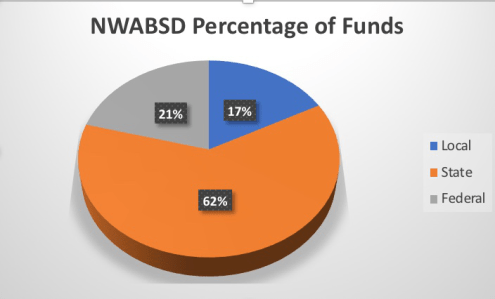
Budget optimization, is a central tenant for the regional school board, superintendent,
and leadership team as it creates the most opportunities for the students and staff of the district. To optimize the budget, in a cyclical fashion, the school district must consistently acquire, appropriate, account, and finally audit the budget. The school district must anticipate and project funding variability prior to the beginning of a new school year.
 Funding Sources
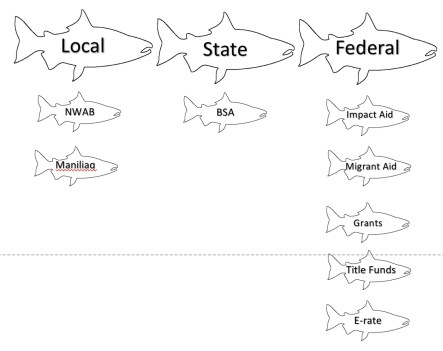
The Northwest Arctic Borough School District’s funding sources are broken down into three areas: local, state, and federal. Each one of these fund locations is made up of many smaller funding sources. For example:
Local Funding Sources Local funding sources makes up 17% of the overall budget. Example of these sources are received from the Northwest Arctic Borough and Maniliaq.
State sources
The state of Alaska provides the majority of funding at 62% of the budget. These sources of revenue are: basic student allocation, boarding home stipend, and grants.
Federal Sources
Federal sources of revenue consists of 21% of the budget. Competitive grants, E-Rate, Impact, and Migrant aid. The diagram above represents the current, major funding sources for the school district.
Please stay tuned – the next blog post will be highlighting funding levels and how the are calculated.
We encourage our stakeholder to attend and be part of our budget committee meetings. This committee meeting takes place the last Monday of each month. Budget items and future trends are discussed.
Acronyms & Explanations
ATC – Alaska Technical Center vocational center for adult and high school students. Course offerings in following areas: Process Technology, Healthcare, Culinary Arts, Construction, and Business.
BSA – Basic Student Allocation
E-Rate – provides discounts for telecommunications, Internet access and internal connections to eligible schools and libraries.
Impact Aid – assist United States local school districts that have lost property tax revenue due to the presence of tax-exempt Federal property, or that have experienced increased expenditures due to the enrollment of federally connected children, including children living on Indian lands
Migrant Aid- Grant programs that provide academic and supportive services to the children of families who migrate to find work in the agricultural and fishing industries.
 Paul Bartos Finance Blog